In the dynamic landscape of industrial processes, forging technology stands as a cornerstone in the manufacturing sector. As the industry continues to evolve, it is crucial to explore the innovations that are shaping the future of forging. From advancements in the forging process to the integration of cutting-edge equipment, this blog delves into the exciting developments on the horizon.
Extraordinary Sturdiness and Strength
Before we venture into the future, let’s take a brief look at the present state of forging technology. Traditional forging methods have been refined over the years, ensuring durability and precision in the production of essential components for various industries.
However, the need for efficiency, sustainability, and enhanced capabilities has fueled the exploration of new frontiers in forging.
Advanced Processes Revolutionizing Forging
The remarkable strength and longevity of forged components make them stand out in industrial applications. Forging is a method that produces a refined and aligned grain structure in metal by applying compressive forces to it. The tensile and yield strengths of the material are increased as a result of this treatment. The end products are more resilient than their alternatively produced counterparts, with the ability to tolerate high loads, severe temperatures, and challenging climatic conditions.
Forged components are essential in sectors including aircraft, automotive, Windmill and oil & gas where structural integrity and dependability are critical due to their exceptional strength.
Advanced Processes Revolutionizing Forging
In the world of forging, innovation is key to moving forward. We understand how important it is to use the latest technologies to improve what we do and get great results. Among these advancements, the use of an infrared pyrometer stands out as a notable tool for temperature measurement in billet heating processes.
With their non-contact measurement capabilities and rapid response time, infrared pyrometers contribute to the efficiency and accuracy of our operations. However, alongside these advancements, we leverage several other advanced processes to revolutionize forging:
Precision Forging
One of the emerging trends in forging technology is precision forging. This process involves the use of advanced simulation and control systems to achieve unparalleled accuracy in shaping metal components. The result is a reduction in material waste, improved product quality, and enhanced overall efficiency. Precision forging is becoming increasingly popular in industries where tight tolerances are crucial, such as aerospace and automotive manufacturing.
3D Simulation: Enhancing Forging Efficiency
One of the emerging trends in forging technology is precision forging. This process involves the use of advanced simulation and control systems to achieve unparalleled accuracy in shaping metal components. The result is a reduction in material waste, improved product quality, and enhanced overall efficiency. Precision forging is becoming increasingly popular in industries where tight tolerances are crucial, such as aerospace and automotive manufacturing.
Automation in Forging Processes:
Automation has become a game-changer in the forging industry, streamlining processes and improving overall efficiency. Happy Forgings Limited embraced automation in their forging plants, automating repetitive tasks and allowing skilled workers to focus on more intricate aspects of the production process. This has not only increased productivity but also improved worker safety.
Innovation in Machining
Tailored Designs
Machining offers flexibility to create custom crankshaft designs based on specific engine requirements, including varying stroke lengths, engine capacity (HP), torque, fatigue requirements, surface hardness (induction hardening, nitriding), journal sizes, and configurations.
Performance Enhancements
Machining allows for modifications such as knife-edging (reducing windage losses), lightening (reducing rotating mass), and cross-drilling (improving oiling), enhancing engine performance in racing or high-performance applications.
Machining Accuracies
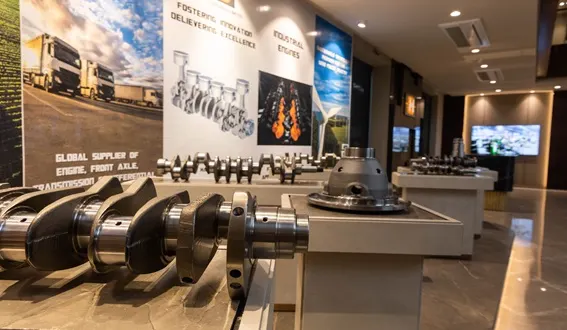
The crankshaft, being the heart of the engine, demands precise geometrical and dimensional control, including roundness, surface finish, prevention of thermal damage (no burning during grinding), pin rod parallelism, pin angles, and journal run-out, especially in the pin rod and journal rod grinding processes.
Additionally, achieving cleanliness (Millipore test) before packaging is crucial, which can be attained through a specially designed robotic washing process.
Sustainable Forging Practices
Green Forging
Sustainability is a growing concern in the manufacturing sector, and forging is no exception. Green forging practices focus on minimizing environmental impact by optimizing energy usage, reducing emissions, and using renewable sources like solar energy. Innovations in energy-efficient heating technologies and closed-loop forging processes contribute to forging’s evolution toward a more sustainable future.
Recyclability and Circular Economy
The forging industry is exploring ways to contribute to the circular economy by designing products with recyclability in mind. Materials that can be easily recycled or repurposed after their lifecycle reduce the environmental footprint of forging operations. The adoption of eco-friendly materials and forging techniques aligns with global efforts to create a more sustainable and circular approach to manufacturing.
Collaborative Efforts and Industry Initiatives
Industry Association Initiatives
Forging industry associations play a pivotal role in driving innovation. Collaborative efforts within the industry foster the exchange of knowledge and best practices. Industry associations often organize conferences, workshops, and knowledge-sharing platforms to facilitate discussions on the latest technologies, ensuring that the entire forging community stays informed and aligned with advancements.
Equipment Digests
Staying updated on the latest equipment innovations is crucial for forging manufacturers. Equipment digests, industry publications, and technology showcases provide insights into the newest machinery and tools available. Manufacturers can leverage this information to invest in state-of-the-art equipment that enhances their forging capabilities, ensuring they remain competitive in the market.
Conclusion
As we peer into the future of forging technology, it’s evident that innovation is driving the industry forward. Precision forging, additive manufacturing, smart equipment, sustainability initiatives, and collaborative efforts within the industry are shaping a new era for forging. Manufacturers embracing these advancements are not only ensuring their competitiveness but also contributing to a more sustainable and efficient future for the forging industry. The horizon is bright, and the evolution of forging technology continues to be a fascinating journey into uncharted territories.