
Environment
Forging a Greener Future
At Happy Forgings, sustainability is at the core of our business. We responsibly manufacture high-performance components while minimizing our environmental impact and focusing on resource efficiency. Our approach to sustainability is guided by a commitment to discipline, technology, and a long-term vision. We focus on continuous improvement across our operations, from managing resources efficiently to investing in clean energy, responsible waste management and initiatives to reduce carbon footprint. As we support industries worldwide, we remain dedicated to creating a more sustainable future for our planet and our people.
Our Sustainability Targets
50% Reduction in Scope 1 & 2 emissions by 2030
100% Zero Liquid Discharge across all sites
Reducing freshwater consumption by 35% by FY 2031–32
20 MW Solar Plant installation by 2028
30% Reduction in non-hazardous waste
CDP Climate Disclosure participation for transparency
Certifications
Green Energy Initiatives
- 1.7 MW solar expansion completed in 2024–25
- ~4,000 tonnes of CO2 emissions avoided annually
- Solar power directly integrated into production
- 6.5 MW total rooftop solar capacity
- Reduced reliance on traditional grid energy
Happy Forgings’ Renewable Journey
-
Installation of the first 4.8 MW Rooftop Solar plant started
2022
-
2023
Installation completed and plant operational
-
2.6 % Renewable Energy share of total energy requirement
2024
-
2025
4% Renewable Energy share of total energy requirement
Installation of an additional 1.7 MW Rooftop Solar plant was completed on March 25.
Total installed capacity by FY25 reached 6.5MW
-
Renewable Energy contribution will be 5% of the total energy requirement
2026
Roadmap & Targets – Increase Share of Renewable Energy to 50% by 2030
FY27
Installation of ground-mounted On-Grid 20.5 MW Solar Power Plant
FY28
Installation of a 5-6 MW rooftop solar power plant
Emissions Management
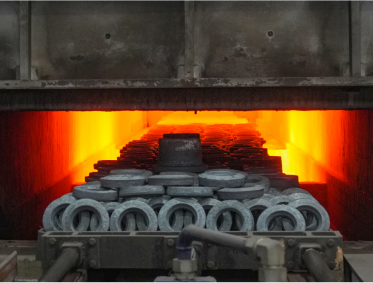
Happy Forgings is transforming its energy approach to reduce environmental impact. By replacing furnace oil with induction heaters and LPG, and upgrading systems for cooling, compression, and temperature control, we’ve significantly lowered emissions. These innovations enhance efficiency, improve air quality, and align our manufacturing with a cleaner future.
- Transitioned from furnace oil to induction and LPG systems
- Automated cooling towers and redesigned compressor systems
- Installed advanced temperature regulation for energy control
- Scope 1 GHG emissions: 8,771 tCO2e
- Scope 2 GHG emissions: 96,761 tCO2e
- GHG intensity: 1.28 tCO2e per metric ton of output
Water Stewardship
Turning wastewater into a resource
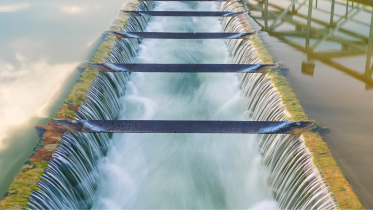
We consider water as a vital resource—not a disposable input. Through advanced treatment systems like STPs, ETPs, and reverse osmosis, we recycle and reuse water across operations. Our goal of 100% wastewater recycling by 2025 reflects our commitment to conservation and closed-loop sustainability.
- 2,60,263 KL total water consumed
- 36,156 KL treated water reused
- 3.1 KL water intensity per metric ton of output
- Tertiary treatment through reverse osmosis
- Wastewater recycling target: 100% by 2025
Waste Management
Innovating for a zero-waste future
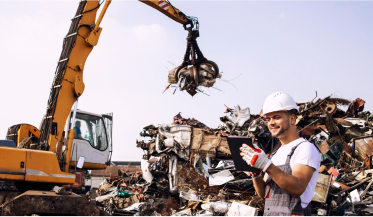
Waste is treated as a resource through mindful use and creative recovery. By recovering cutting oil, repurposing sludge, and reusing packaging materials, operations are becoming more efficient and environmentally sound. With a clear goal to eliminate wood-based and non-recyclable packaging by 2030, the path toward circular manufacturing is well underway.
- Commitment to eliminate wood-based and non-recyclable packaging by 2030
- 27,342 MT total waste generated
- 19.9 MT hazardous waste
- 0.33 MT waste intensity per metric ton of output
Climate Risk Readiness

Manufacturing is evolving in response to climate change, and resilience is now a strategic priority. Through site-specific risk assessments and infrastructure upgrades, we’re preparing for rising temperatures, water scarcity, and supply chain disruptions. Our strategy aligns with global frameworks to ensure responsible growth and long-term operational stability.
- Climate risk assessments conducted across all plant locations
- Heat-resistant materials selected for critical infrastructure
- Backup systems installed for water and power supply
- Emergency response protocols tailored to each site
- Strategy aligned with TCFD and ISO 14090 standard